


ULTIMATE STRAIGHT RAZOR SELECTION GUIDE: FROM BLADE TO HANDLE
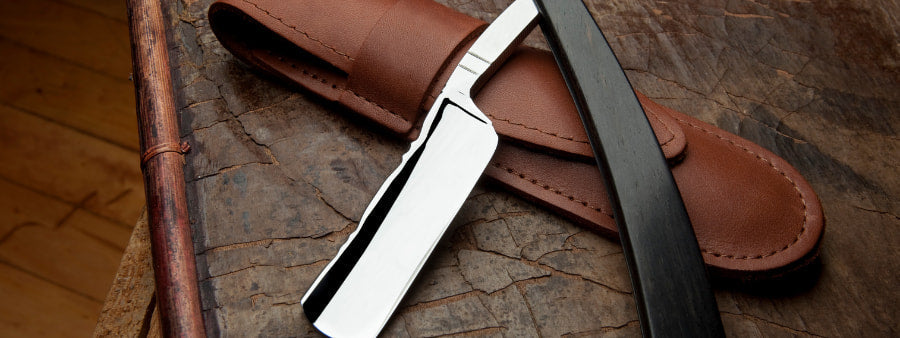
Embark on a journey through the refined art of selecting the perfect straight razor. This guide simplifies the choices behind the blades that have defined classic shaving for generations, highlighting the key differences and offering insights into the various options available.
CHOOSING BETWEEN CARBON STEEL vs STAINLESS STEEL
Carbon Steel: The Traditional Choice
A mix of iron and carbon, carbon steel has been used to produce cutting implements for hundreds of years.
- Pros: Carbon steel, an alloy of iron and carbon, is known for its exceptional hardness and sharper edge, ensuring a superior shave.
- Cons: Requires careful maintenance to avoid rust and discoloration, including drying and oiling after each use.
Stainless Steel: The Modern Alternative
A mix of iron and chromium, stainless steel is a go-to material for wet environments or where hygiene is important.
- Pros: Offers resistance to rust and minimal maintenance, making it a practical choice for modern users.
- Cons: May not achieve the ultra-sharp edge of carbon steel but remains a reliable option.
BLADE SIZE & GRIND: MATCHING YOUR SHAVE NEEDS
Blade Size Explained: Straight razor blades are often measured in 8ths of an inch, indicating the blade's width from spine to cutting edge. A smaller blade size, like 5/8”, is typically recommended for beginners due to its easier maneuverability and visibility during the shave.

Understanding Blade Grind and Hollows: The grind of a straight razor blade refers to how much metal has been removed during the forging process to create the blade's concave shape, often referred to as the "hollow." This aspect is crucial as it affects the blade's flexibility, weight, and shaving feel.
Fuller Grinds (Wedge or Quarter Hollow): These blades are thicker and have less concavity, making them less flexible. They offer a more forgiving shave, ideal for beginners or those with sensitive skin. The weight of the blade can help in providing a stable, smooth shave with less pressure required.
Thinner Grinds (Half Hollow, Full Hollow): These blades feature more pronounced concavity, making them lighter and more flexible. This flexibility allows for a closer shave as the blade can adapt more easily to the contours of the face. Full hollow blades are particularly favoured by experienced users for their precision and the closer shave they can provide. However, they require a steadier hand and more careful technique.

EDGE PROFILES & POINTS: PRECISION AND SAFETY
Straight razors can have different edge profiles, influencing how the blade interacts with the skin. A straight profile is standard, providing a consistent shaving angle. A "smile" profile, with a slight convex curvature, can offer a closer shave on contoured areas by increasing the blade's contact with the skin.
Blade Point: Shaping Your Shaving Experience
The point, or tip, of the straight razor, significantly affects maneuverability and safety.
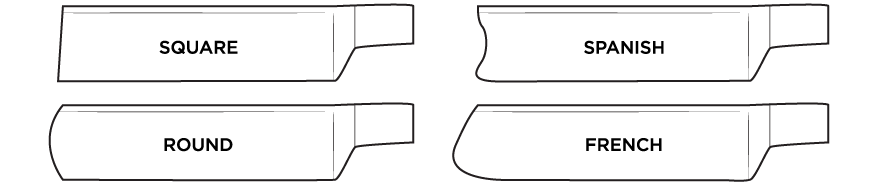
Round Points: Feature a rounded end, reducing the risk of nicks and cuts. Ideal for beginners or those who prioritize safety over precision in hard-to-reach areas.
Straight (Square) Points: Offer a sharp, angular end for detailed styling and precision. Best suited for experienced users who require accuracy for defining lines or shaving close to facial features.
Choosing between round and straight points depends on your comfort level, shaving experience, and the need for precision in your grooming routine. Understanding these aspects ensures a safer, more tailored shaving experience.
HANDLE TYPES: BALANCE AND AESTHETICS
The handle affects the razor's balance and overall feel, with options ranging from practical to luxurious, each offering a unique shaving experience.
MAINTENANCE: KEEPING YOUR BLADE IN TOP FORM
Committing to regular stropping and periodic honing ensures your straight razor remains sharp and effective for years to come. Check out our stropping guide here!
SHAVETTES: THE BEGINNER-FRIENDLY OPTION
Shavettes provide an accessible introduction to straight razor shaving, using disposable blades to offer a similar experience without the maintenance.
Check out our straight razor kits for beginners and experts alike




Do you offer a straight razor in true wedge , near wedge or quarter wedge , please
Hello out there.
Can someone please direct me to good detailed instructions on how to shave proerpyl with a cut-throat blade? From angles to most importnanrtly hand position in holding the blade as you shave.
Thank you in advance.
Have just bought a razor, strop belt, whet sharpening stone etc.
But finding it hard in handling the blade.
regards
Terry
Hi Blair, great question! We always recommend lightly stropping the razor before every use. Aside from the boost in sharpness of the blade, it’s also an effective way of ensuring the edge is clean before you begin shaving.
Hi,
I received my first straight razor for Christmas as a present but not sure if I have to strop it before the first use? Or is straight out of the box good to go? I’ve got a TI Straight Razor 5/8" FH Evide Sonnant.
Cheers, Blair
Hi Kim, thanks for the question! There are a small number of Australian send-away services that will sharpen (and even restore) straight razors for a very reasonable fee. Please feel free to get in touch by email if you’d like to learn more.
In terms of the honing stones, a brand new razor that’s been factory sharpened (as are all of those in our range) will not require honing with a full set of stones. Regular stropping with a leather strop before every shave will take care of the majority of the edge maintenance. For these new razors, honing on a fine stone such as the Shapton 8000 grit every 1-3 months (depending on use) will bring the edge back to an acceptably sharp level once it begins to dulll.
The coarser stones (eg. 1000 and 3000 grit) are used to ‘reset’ the bevel of the razor. This generally only needs to be done once a year if you’re not shaving with the razor on a daily basis. Of course, there will be differing opinions on this depending upon who you speak to (and how much you’re willing to spend!).
I hope that helps!
Where can you get a straight razor sharpened? I haven’t been able to find any business that provides that service and spending $500+ on sharpening stones doesn’t exactly make straight razors an attractive proposition.
Hi Peter, thanks for catching that! Fixed up now :)
Hi B&B Team,
Just rereading this blog and noticed one small error that could confuse, – In the section tilted Carbon Steel v Stainless Steel, -Stainless steel, -pros, end of 1st line should (methinks) read “carbon”.
That is all, – other than I’m enjoying the products you bring to us and the bits n bobs I’ve bought [from B&B]
Cheers, Peter